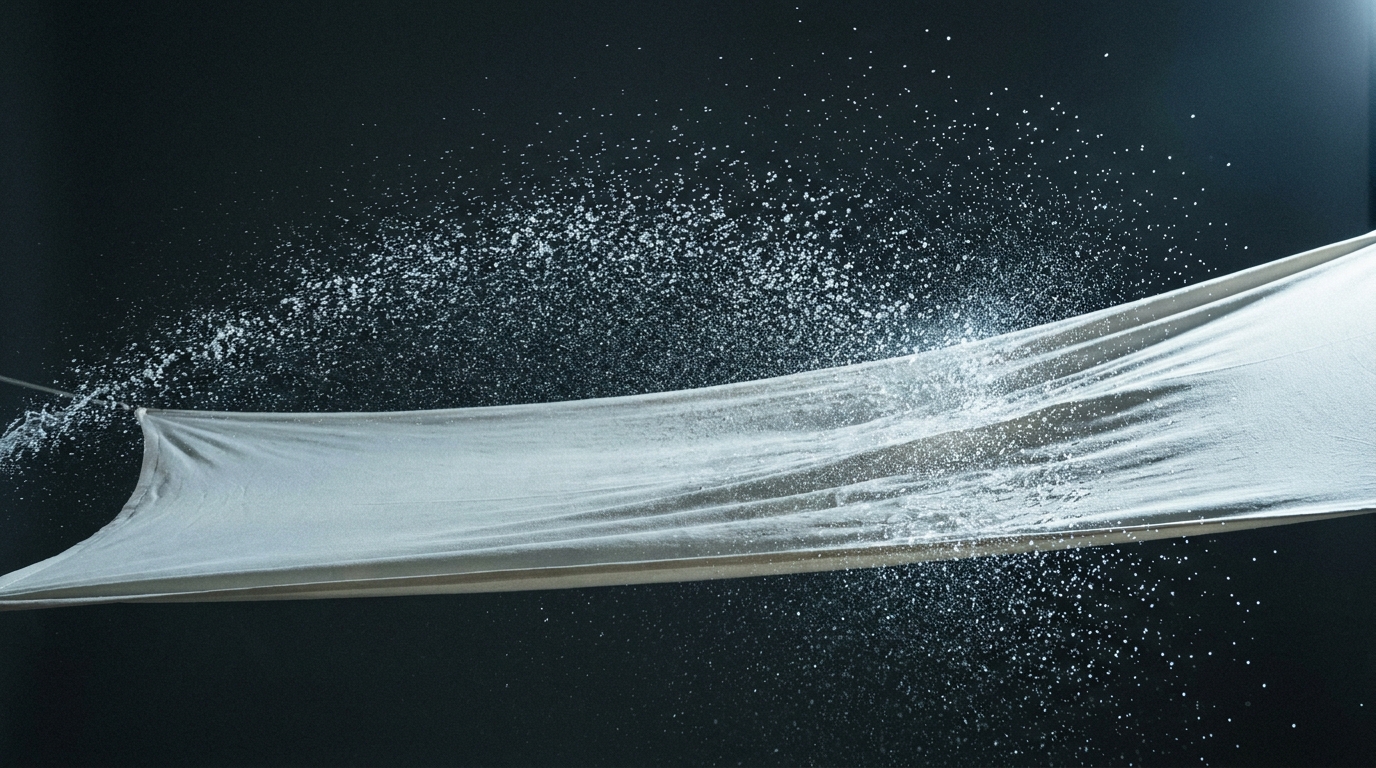
Some tests you can literally watch. The AATCC 22 spray test is one: water is sprayed onto a stretched swatch at a fixed height, and a technician grades how wet the surface gets against a printed scale. It's fast, visual, and — used carefully — genuinely useful. It also gets over-interpreted constantly.
What the rating measures
AATCC TM22 produces a spray rating, usually on a 0–100 scale, of how much water beads off versus soaks in. A high rating means the surface is repelling water well right now. That's it — surface wetting, at that moment, on that swatch.
0 – 100
The AATCC 22 spray rating grades surface wetting — not durability, and not what the finish is made of.AATCC Test Method 22
Where it misleads
- It says nothing about durability. A finish can score beautifully new and fail after ten washes. Repellency claims need wash-cycle data, not a single fresh swatch.
- It says nothing about chemistry. A great spray rating can come from a PFAS finish or a PFAS-free one. The test measures behaviour, not composition — so a high score is not evidence a fabric is "clean."
A perfect spray rating tells you the water beaded. It tells you nothing about what made it bead.
That's why a credible repellency story pairs a performance test (spray rating, after N washes) with a composition test (total organic fluorine). One shows it works; the other shows what it's made of.
Sources
- AATCC Test Method 22 (water repellency: spray test).